Make Money With AI Influencers: Real Numbers, Seven Income Streams, and an Honest Timeline
Make money with AI influencers in 2026: 7 income streams, verified earnings ranges, named brand deals, honest timeline. No camera.

You make money with AI influencers in 2026 by locking one consistent virtual persona, then stacking streams: affiliate commissions, brand deals, digital products, paid UGC for companies, and fan subscriptions. Documented creators earn from a few hundred dollars a month up to about 30,000 dollars in peak months. First dollar can land in 4 to 8 weeks.
Aitana Lopez earned about $11,000 in her best month. She is not a person. She is an AI influencer: a consistent virtual persona with a name, a face, a voice, and an audience that follows her like any other creator. That is the difference between an AI influencer and an avatar in a video. The avatar is a tool. The influencer is an identity people come back to. Real creators make money with AI influencers this way, but the loudest numbers online are unverified, and most of the people quoting them are selling you something. Every figure in this guide is sourced, and the estimates are labeled as estimates. Here is the full playbook.
How Much Do AI Influencers Make? Named, Verified Cases
How much do AI influencers make is the first question everyone asks, and most guides answer it with anonymous case studies and math that does not add up. So let’s use names.
| Who | Followers | Earnings | What Is Verified |
|---|---|---|---|
| Emily Pellegrini | 80K+ on Instagram | Reported monthly revenue grew to about $23,000 in a single month | Reported by Fortune; the highest documented single-month figure for an indie AI persona; her creator’s wider million-dollar claim includes course sales and is not platform-verified |
| Aitana Lopez | ~400K on Instagram | About $11,000 in one peak month, roughly $3,200 a month average, just over $1,100 per advert | Creator-stated figures reported by Fortune and Entrepreneur; income from brand deals plus subscriptions |
| Lil Miquela | ~2.5M on Instagram | About $6,000 to $9,000 per sponsored post | Industry estimates only; the famous eight-figure annual claims trace to one unaudited estimate |
| Lu do Magalu | 30M+ across platforms | About $2.54M in 2024 from 74 sponsored posts, roughly $34,000 per post | A single third-party analysis; she is a corporate mascot with a full production team, not an indie creator |
Honesty caveat: only some of these figures are platform-confirmed. The rest are creator statements or third-party estimates, and every public list of AI influencer earnings suffers from survivorship bias. You are reading about the winners, not the thousands of accounts that never made a dollar.
The spread tells the real story. The top of the market is a Brazilian retail mascot backed by a corporate team. The middle is indie creators like Aitana and Emily, earning between a few thousand and low five figures a month. The bottom, which nobody writes case studies about, is most accounts. The realistic ceiling people quote runs up to $30,000 a month, but the highest documented single month is Emily Pellegrini’s roughly $23,000. The difference between the middle and the bottom is not luck. It is one consistent persona, published daily, monetized through more than one stream. Every part of that is learnable, and the rest of this guide is the how.
Beyond the four above, creators cite other accounts as third-party reports worth knowing: Mother Satori is reported to have driven roughly $240,000 in Amazon-attributed sales (an estimate, not a payout statement), and Bloo is reported to have earned more than $1 million across about 700 million views. Treat both as creator and press claims, not audited numbers, and notice the common thread: each is one distinct character published at volume, not a generic face.
Two newer creator reports round out the picture. One AI-persona operator reports $96,000 in 30 days, with a single reused reel idea driving about 65 million of his 85 million monthly views, and a persona that went from zero to roughly 400,000 followers in under six months. Another creator shows 140,000 followers from just 41 uploads. Same caveat as everything above, these are creator statements, not platform payouts, but the pattern matches the rest of the list: one consistent character, one repeatable idea, published relentlessly.
The single obstacle every one of these creators names is consistency. The “plastic look” and the face that shifts from post to post is what marks an account as fake and stalls it. Creators hack around it with face-swap loops and four-image reference sets. A persistent persona that holds the same face and voice across every post is the native fix, and it is the difference between an account people follow and one they scroll past.
The market behind it is real. Grand View Research puts the virtual influencer market at $6.06 billion in 2024. Forecasts diverge a lot from there, anywhere from $14 billion to $46 billion by 2030 depending on the analyst, so treat any single projection with suspicion. The direction is not in doubt. The size is.
How Many Instagram Followers Does an AI Influencer Need to Earn Money in 2026?
Follower count matters less than niche, offer, country eligibility, and conversion rate. Pakistan is one example country, not a separate playbook. An AI influencer can start with affiliate and UGC style work before any native Instagram payout. Check each program country and account rule first, because those gates change by year and by product.
There is no single follower count that unlocks every way to earn money from an AI influencer. Instagram payouts depend on the feature, your country, and account eligibility. Affiliate commissions and your own product sales follow separate program and payment rules, not one universal Instagram threshold.
Pakistan is one useful example. A creator based there should check country eligibility before choosing a native Instagram payout feature. Do not assume a threshold from an American tutorial applies to your account. You can hit a follower milestone and still be ineligible because of country, age, content, or payout setup.
As rechecked on September 16, 2026, Meta’s Instagram Gifts help page lists at least 500 followers among its requirements. It also requires a professional account, an adult account holder, policy compliance, acceptance of the Gifts terms, a payout account, and residence in an eligible country. Pakistan was not on that page’s eligible country list. Treat the 500 follower number as one requirement for a specific feature where it is offered, not a promise for every market.
Follower ranges and what is realistic (estimates)
| Followers | What is realistic | Notes |
|---|---|---|
| 1K to 5K | Affiliate links and UGC style brand videos | Pays on clicks, sales, or delivered videos, not on reach alone |
| 5K to 20K | Early micro brand deals in a tight niche | Still estimate driven; proof and niche fit matter more than vanity count |
| 20K to 100K | Larger brand deals and stronger product sales | Audience quality and conversion beat raw follower totals |
These ranges are planning estimates drawn from the income paths already documented in this guide. They are not guarantees. Run the math on your offer with the AI influencer income calculator, then compare paths on the make money with AI influencers landing page.
Turn follower ranges into a real income path.
Build one consistent AI influencer, then start with affiliate or product sales while you grow.
$1 three-day trial · First reel in minutes · Cancel anytime




Seven Ways to Make Money With AI Influencers (And What Each Pays)
An AI influencer is not one business. It is a persona that can carry up to seven income streams. Here is each one, in the order that actually pays for most creators, with what it really pays.
1. Affiliate Marketing: The Day-One Stream ($200 to $800/Month Realistic)
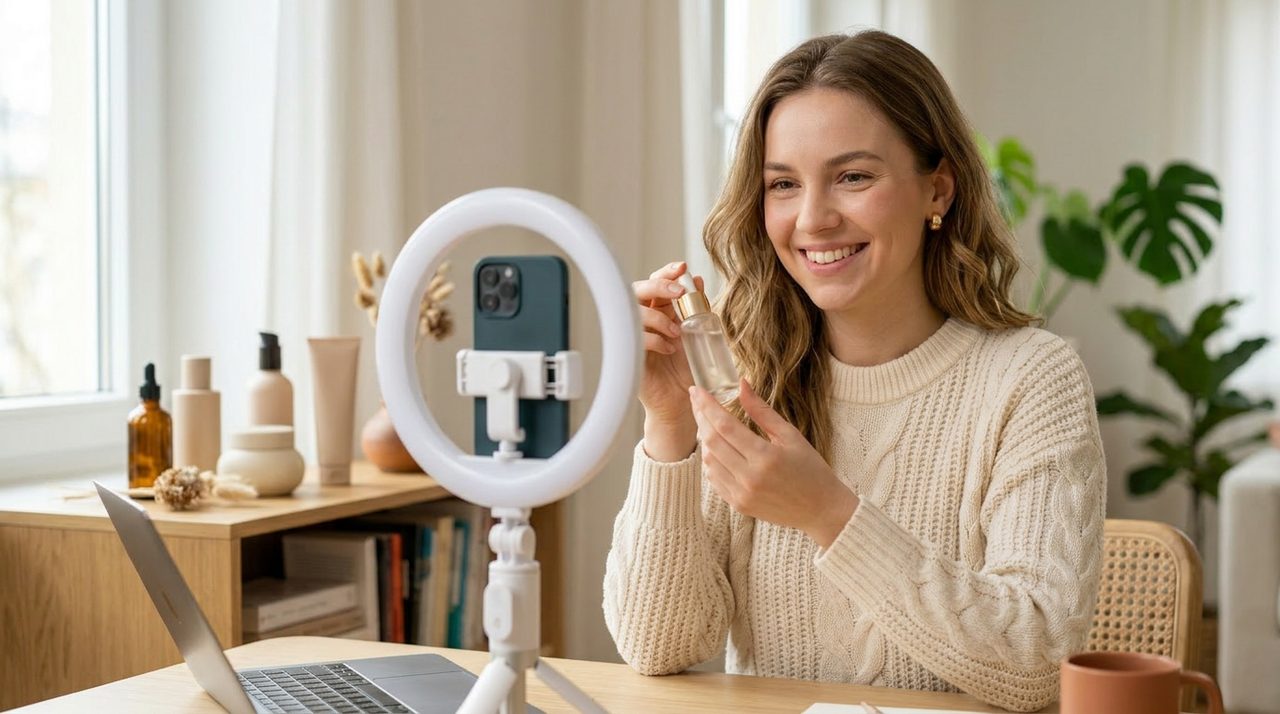
This is the fastest path to a first dollar. You pick products that fit the persona, review them in reels, and take a commission per sale. The money comes from product sales, not a creator fund, so disclosed AI personas are welcome on most programs, which is the whole premise behind AI avatars for affiliate marketing. There are more types than people realize, and the rates vary wildly:
| Program type | Typical commission | Notes |
|---|---|---|
| Amazon Associates | 1% to 20% by category | Games around 20%, luxury beauty around 10%, electronics low; huge catalog, easy approval |
| TikTok Shop affiliate | About 10% to 15% typical, 20% to 30% top beauty and fashion | Paid on product sales, so open to disclosed AI personas |
| LTK | About 10% to 25% | Fashion and lifestyle focused, invite-leaning |
| ShopMy | About 10% to 30% | Fashion and beauty, creator-friendly rates |
| SaaS recurring programs | 20% to 30% recurring, some 40% to 60% | ConvertKit, Kajabi, and Thinkific pay around 30%; income recurs monthly |
| Course and digital product affiliate | Around 30% standard | High margin, often one-click sign-up |
| Negotiated discount-code deals | Custom | Your own code, a cut per sale, direct with the brand |
Commission ranges are program-published rates as of June 2026, not guarantees of income. Earnings depend on traffic and fit.
The affiliate courses teach the same commission ladder, and it climbs as the relationship gets more direct. Self-signup programs you join yourself (Amazon, most SaaS and supplement brands) pay roughly 15% to 40%. Brands that DM you and hand you a code pay more, reportedly 40% to 50%, because they want you specifically. The top rung the courses cite is agency brand deals at a reported 200% to 300%, where the brand can afford it because buyers rebuy and the lifetime value covers the payout. Start on the bottom rung from day one, earn the top rungs by proving the persona sells.
A realistic pattern, not a guarantee: $200 to $800 a month for an account with 5K to 20K followers in a product niche. Recurring SaaS commissions are the quiet winner here, because one good month of sign-ups keeps paying for months after. The full system, which offers convert, the review format, and a 30-day plan, is in our AI influencer affiliate marketing guide.
The funnel that creators in this niche keep describing is a DM-automation loop: a reel ends with a keyword call to action (“comment GUIDE”), a tool like ManyChat catches the comment and opens a DM, and the DM carries the affiliate or product link. It moves the buyer from a public reel into a private conversation, which converts far better than a bare link in bio. A consistent persona is what makes that DM feel like a real creator rather than a spam bot, which is the whole reason recognition matters here.
2. Brand Deals and Sponsorships: The Centerpiece ($100 to $10,000+/Post)

This is the centerpiece, and the proof is a wall of named campaigns. Major brands have paid AI personas for years. This is not hypothetical.
- Lil Miquela: Prada at Milan Fashion Week 2018, Calvin Klein in the 2019 Bella Hadid ad, Samsung #TeamGalaxy, BMW (a 2023 campaign of 7 posts that one case study reports generated about $168,000 in earned media value, single-source so read it as one report), and a multi-season Pacsun ambassadorship starting 2022.
- Imma: IKEA Harajuku (2020), Lenovo (2021), Nomura financial services (2023), and Coach alongside Lil Nas X (2024), plus a roster that includes Porsche Japan, Amazon Fashion, Dior, Valentino, SK-II, and Puma.
- Shudu: Balmain (2018) and Ellesse (2019).
- Noonoouri: Dior, Versace, and Marc Jacobs, then a 2023 Warner Music record deal, the first AI popstar signed to a major label.
- Rozy (South Korea): Chevrolet, Calvin Klein, Hera, and Tiffany and Co., with more than 100 deals reported.
- Kuki: an H&M campaign that, per H&M’s own release, drove 11 times the reach and a 91% lower cost per ad recall.
- Lu do Magalu: about $2.54M in 2024 across 74 sponsored posts, roughly $34,000 per post.
- Aitana Lopez: Olaplex, Brandy Melville Spain, and Llongueras.
Brand deals follow follower tiers, and AI accounts that win deals get paid on the same scale as human accounts, sometimes slightly under:
- Nano (under 10K followers): $10 to $100 per post, up to $200 to $500 with strong engagement.
- Micro (10K to 100K): roughly $100 to $1,000, climbing to $1,500 to $5,000 around 50K followers.
- Macro (100K to 1M): $5,000 to $10,000+ per post.
For a real-world anchor: Aitana Lopez earns just over $1,100 per advert at around 400K followers. Brand deals start mattering around 10K followers. Before that, affiliate pays better.
Landing the deal is a process, not luck. Build a one-page media kit with your reach, engagement rate, audience demographics, and your 3 to 4 best-performing posts. Pitch brands directly by DM or email with one specific content idea for their product, not a generic “let’s collab.” Some creator marketplaces now list AI and UGC-only creators, so check each marketplace’s identity rules before listing a fictional persona, since most verify the human behind the account.
A persona brands actually book.
The named deals above run on one thing: a face and voice that stay consistent across every post. AvatarFactory locks that identity.
$1 three-day trial · First reel in minutes · Cancel anytime
3. Your Own Digital Products: The Stream You Own ($5 to $500 Each)

Once the persona has proof, the persona itself becomes the product. This is often the most durable stream, because you own it outright and the margins are high.
- Online courses: $50 to $500 is the typical range. Teaching what you know about building the persona is itself the product.
- Ebooks and guides: lower price, near-zero marginal cost, good for top of funnel.
- Prompt packs and presets: $5 to $50 each (market estimate). The recipes that built your look, sold as a download.
- Templates: scripts, content calendars, media-kit templates.
- Paid communities: real platform economics matter here. Whop takes roughly 3% to 6% all-in. Skool runs $9 or $99 a month with a 10% or 2.9% fee depending on plan. Patreon takes roughly 10% plus processing.
The telling example: Emily Pellegrini’s creator’s headline million-dollar claim leaned heavily on course sales, not platform payouts. Teaching the machine can out-earn the machine. And the price point can stay low: one creator shows a $27 ebook account that generated thousands of dollars in sales within seven weeks of launch, a creator report rather than an audited payout, but a clean picture of how fast a cheap, high-margin offer can pay once the persona has attention.
4. Recordings for Companies: No Audience Needed ($75 to $3,000+/Video)
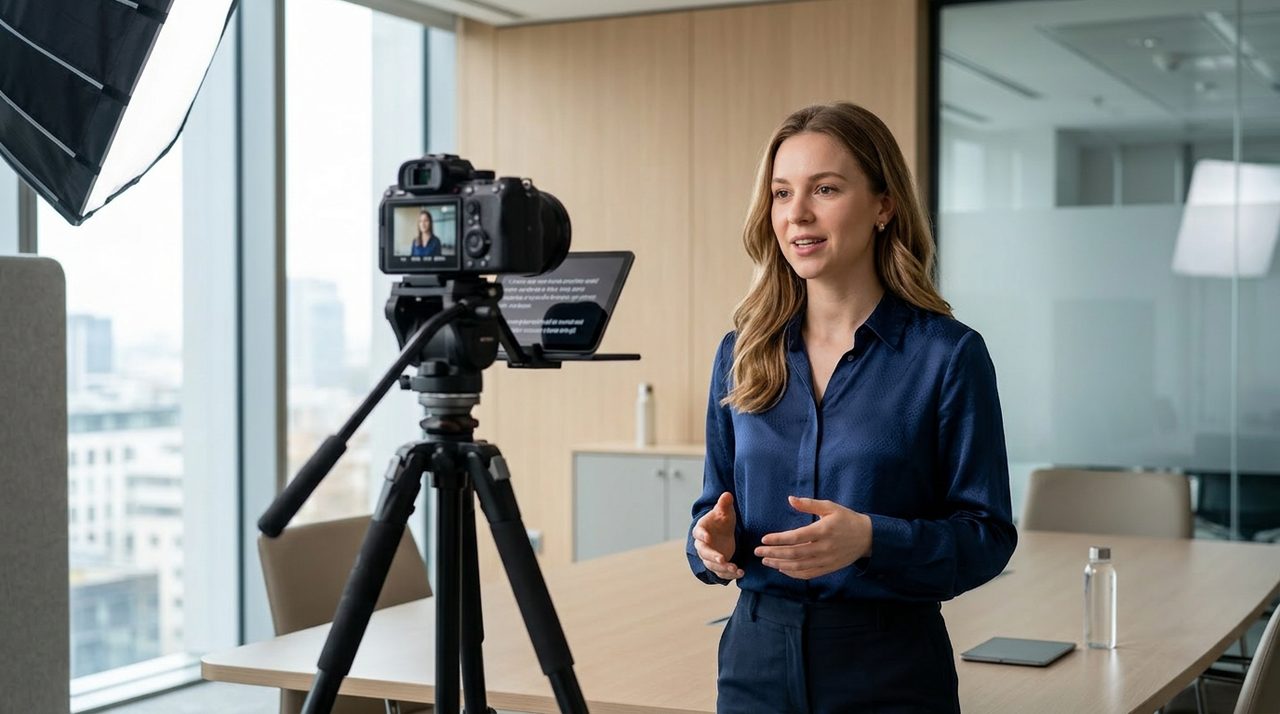
Brands buy creator-style videos to run on their own channels: spokesperson clips, training and explainer videos, and UGC-style ad videos. The best part is that your follower count never comes up, so this works with zero audience. Companies already hire AI personas for exactly this: Nomura hired Imma for investment-account ads, Lenovo ran a campaign with her, and H&M used Kuki.
Typical UGC video rates, as a guide:
- Average UGC video: $150 to $300.
- Beginners: $75 to $300.
- Mid-tier: $300 to $1,000.
- Top creators: $600 to $3,000+.
- Tech and beauty verticals: $300 to $1,500.
- Usage rights add 50% to 150% on top of the base rate.
Pricing, packaging, and the cold pitch that lands the first client are in our guide to selling AI UGC to brands.
5. Community: The Recurring Layer That Compounds (Steady Monthly Income)
This is the recurring engine, and it has its own deep dive on the AI influencer community page. People pay a monthly fee for access to a members area: exclusive posts, behind-the-scenes content, a course, and a group built around the persona. Think Whop and Skool first. Whop takes roughly 3% to 6% of each sale. Skool runs $9 or $99 a month. The pitch is simple: a few hundred members at a low monthly price is steady recurring revenue, and it rewards a persona with a real character, because people pay to be in a room with a personality, not to look at a picture. For a labeled, safe-for-work persona this is the centerpiece of recurring income, not a side layer.
The Compounding Math, Worked All the Way Through
Here is the part most guides skip. A one-off product sale pays you once. A subscription pays every month the member stays, so the revenue stacks instead of resetting to zero. That is what “compounds” actually means, and it is worth seeing in real numbers.
Take a $47 a month community on Whop. Whop takes roughly 3% to 6% of each sale, so on a $47 charge you keep about $44 to $45.50. The numbers below use the 3% case (you keep $45.59 per member) and round to whole dollars.
| Paying members | Monthly gross | Monthly net (after ~3% Whop fee) | Annual net |
|---|---|---|---|
| 100 | $4,700 | $4,559 | $54,708 |
| 250 | $11,750 | $11,398 | $136,770 |
| 500 | $23,500 | $22,795 | $273,540 |
| 1,000 | $47,000 | $45,590 | $547,080 |
A single $47 tier on Whop, net of the platform cut, before tax. One offer, paid monthly.
So 1,000 members at $47 is roughly $45,590 a month, about $547,000 a year, from one community. That is the headline number. Now the honest part: what it takes to get there.
How many followers you need. A paid subscription converts a small slice of an audience, not all of it. Plan on roughly 0.5% to 2% of your followers ever joining a paid tier, depending on how engaged and how niche the audience is. This is an estimate, not a guarantee, so treat 1% as your planning number until your own data says otherwise.
| Follower-to-paid conversion | Followers needed for 1,000 members |
|---|---|
| 2% (tight, highly engaged niche) | 50,000 |
| 1% (typical planning number) | 100,000 |
| 0.5% (broad, casual audience) | 200,000 |
Conversion is an estimate, not a promise. Build the audience first, then the math turns on.
Why it actually compounds. Each month you keep last month’s members and add new ones, minus the ones who leave. Community churn usually runs 5% to 10% a month, so some members always cancel. As long as new signups beat churn, the base grows and the recurring revenue grows with it. Worked example: at 500 members with 8% monthly churn you lose about 40 members a month, so the first 40 new signups just hold you flat, and everything above that is real growth. Add a net 50 members a month at $47 and you are stacking about $2,350 of new recurring revenue every single month, on top of everything already paying. A one-off product starts from zero each month. A subscription starts from where you left off. That is the whole point of the layer.
The honest read: a few hundred members at $47 is already a real five-figure-a-month income, but it sits on top of an audience you built through the other streams first. Treat your community as the compounding layer, not the first dollar you earn.
6. Fan Subscriptions: Paying for the Persona Directly (The Smaller, Niche Layer)
This one is different from a community, and smaller. Here fans subscribe to the persona itself rather than to a group or a course. Creators point to fan subscription platforms like Patreon, where tiers reportedly run from about $3.99 to $100 a month. The useful part for us: non-spicy, character-driven personas work here too. Aitana Lopez, built as a gaming persona rather than an adult one, is the example creators cite. A clean, safe-for-work persona with a strong character can run a paid tier without going anywhere near adult content. The character carries the subscription, not the skin. Treat this as a bonus layer for personas with genuinely devoted fans, not a core stream. The same compounding math from the community section applies, just at smaller numbers and only once the fans are truly attached. The revenue shape here is lopsided by design: operators report about 80% of subscription revenue comes from a small core of emotionally attached fans, which is why persona consistency and a daily presence, Stories and personality content included, matter as much as viral reach once this layer is on.
7. YouTube Ad Revenue and CPM Deals: The Volume Stream (Original Content Only)
This is the one platform payout that survived the 2025 AI crackdown, and it comes with a hard condition. YouTube demonetized mass-produced, templated AI video, but it kept ad revenue open for genuinely original, AI-assisted content: real scripts, real research, a real point of view, edited with care. A faceless AI persona that teaches, reviews, or explains something useful in long-form qualifies. A channel that reposts the same templated clip 50 times does not. Read that line twice, because it is the whole game on YouTube.
There are two ways the audience pays you here, and they stack on the same video.
Ad revenue (the YouTube Partner Program). Once you pass 1,000 subscribers and 4,000 public watch hours in 12 months, YouTube runs ads against your videos and pays you 55% of the ad revenue (it keeps 45%). What you actually take home is measured as RPM, your earnings per 1,000 views after that cut. RPM swings hard by niche, and that swing is the most important number in this whole stream.
| Channel niche | Typical creator RPM (take-home per 1,000 views) |
|---|---|
| Lifestyle, entertainment, general | $1 to $5 |
| Tech, software, marketing | $6 to $15 |
| Finance, business, “make money online” | $12 to $35+ |
RPM is after YouTube’s 45% cut. Niche and audience country move it more than raw view count does. Ranges as of June 2026, not guarantees.
Worked example: a business-niche AI persona doing 200,000 long-form views a month at a $12 RPM earns about $2,400 a month in ad revenue alone. The exact same 200,000 views in a low-RPM lifestyle niche at $3 RPM is about $600. Same effort, four times the income, decided entirely by niche. That is why “make money, business, software” personas out-earn the pretty ones on YouTube.
CPM sponsorship deals. Once your view counts are steady, brands stop paying a flat fee per post and start paying on a CPM basis, a set rate per 1,000 views, because it ties their spend to the reach they actually get. Integrations commonly run $15 to $30+ CPM. A single 60-second brand mention in a video that pulls 100,000 views at a $25 CPM is about $2,500 for one placement, and it sits on top of the ad revenue the same video already earned. It is the same brand-deal muscle as stream 2, priced for volume instead of per post.
The honest read: YouTube is the long game. It pays the least on day one and the most at scale, and only if the content is genuinely original rather than templated. Pair it with the search-traffic playbook in our faceless YouTube with AI guide.
Why Creator Funds Are Not on This List (The Door Platforms Closed)
Because the platforms closed that door. TikTok Creator Rewards explicitly excludes fully AI-generated content; “minimal original input” is ineligible, and unlabeled AI content faces escalating penalties. YouTube’s July 2025 inauthentic content policy demonetizes mass-produced, templated AI video, while keeping AI-assisted original content monetizable.
The other native programs, honestly graded:
- Instagram Subscriptions and Badges: Meta has not published a rule excluding labeled AI accounts, but eligibility is account-by-account and payouts stay small until the audience is large. A bonus, not a plan.
- TikTok Shop affiliate commissions: viable, because the money comes from product sales, not the creator fund. Covered under affiliate above.
- X Subscriptions and tips: technically open, practically negligible. The audience there is worth more routed to your own products and community.
Be precise about the difference, because it is easy to get wrong. Creator funds, the pool-style payouts like TikTok Creator Rewards, are closed to AI personas, full stop. Ad revenue on a templated, mass-produced AI channel is also a policy violation. But ad revenue on genuinely original, AI-assisted content is a completely different thing, which is exactly why YouTube ad revenue earns its place as stream 7 above. The closed door is the low-effort creator fund, not YouTube monetization itself. Affiliate, brand deals, your own products, paid video, community, fan subscriptions, and original-content ad revenue are the reliable channels. What still works on YouTube specifically is covered in our faceless YouTube with AI guide.
The Stack That Runs One Persona
Most “tools you need” sections in this niche are a sales page. The popular courses send you to stitch together five or six of them: an image generator for the face, a voice tool, a video render tool, a lip-sync tool, a captions tool, and a DM automation tool. Creators report that stack runs about $118 to $168 a month across five or six separate logins, and the consistency breaks at every handoff because none of the tools share the same face. AvatarFactory replaces that stitch with one workflow: one face and voice locked across every video, script to publish-ready reel in about 3 minutes. Here is the honest version: one paid tool at most, four jobs total.
| Job | Tool | Cost |
|---|---|---|
| Persona and video core | AvatarFactory: one consistent face and voice across every video, script to publish-ready reel in about 3 minutes | $1 three-day trial to start |
| Scheduling | Platform-native schedulers first, then Buffer or Later once you cross-post daily | $0 to about $15 a month |
| Link in bio | Linktree or Beacons, routing everything to your offers | Free tiers |
| Analytics | Native platform analytics plus a spreadsheet tracking revenue per follower | Free |
Four jobs, one paid tool at most. The constraint in this business is scripts, not software.
Creators sometimes add a standalone image generator for grid stills or a separate voice tool for long-form audio. Add those when a specific bottleneck shows up, not on day one.
The 90-Day Plan to Make Money With AI Influencers (Honest Milestones)
Skip the blueprint curves promising five figures by month two. Here is the version with honest milestones.
What it costs to start: less than most hobbies.
| Item | Cost |
|---|---|
| AvatarFactory | $1 three-day trial to start |
| Whop / Skool | Whop takes a cut of sales, not a fee; Skool starts at $9 a month |
| Optional: scheduling tool, small ad tests | $0 to $50 a month |
Startup costs are near zero; platforms take a revenue cut, not a fee.
Break-even math: one UGC video sold covers a month of paid tooling. Time budget: plan on 8 to 12 hours a week, one batching block for scripts and generation plus short daily windows for posting and engagement. The constraint in this business is consistency, not capital.
Weeks 1 to 2: build one persona in one narrow niche. Not “fitness.” Something like home workouts for new mothers, or budget travel in Southeast Asia. Narrow niches convert; broad niches drown. On economics, here is the honest qualitative grid; any guide quoting exact dollar ranges per niche is making them up:
| Niche | Growth difficulty | Monetization ceiling | Brand deals |
|---|---|---|---|
| Fitness | Hard, crowded | High | Strong |
| Fashion / beauty | Hard | High | Strong |
| Tech / AI tools | Medium | High | Strong |
| Travel | Medium | Medium | Medium |
| Finance / hustle | Medium | High | Medium |
| Cozy / aesthetic | Easy | Low | Weak |
Qualitative ratings from operator practice, not a study. Pick for fit with your audience and your knowledge, not for the highest ceiling.
Our faceless Instagram theme page guide covers niche selection in depth. Then lock the identity: one face, one voice, one name, one backstory. Consistency is the entire asset. In AvatarFactory you can create recurring avatar creators with the same face and voice across every video, which is exactly what this phase requires.
Weeks 3 to 6: publish daily across Reels, TikTok, and Shorts. Volume plus pattern-matching beats inspiration. AvatarFactory’s trend engine has scanned more than 500 million short-form videos to surface the hooks and formats traveling right now, so you are copying proven structures, not guessing. You can even recreate viral reels with AI, pulling a winning reel’s script straight into the wizard for your own avatar to perform. One finished script becomes a publish-ready reel in about 3 minutes, so daily posting is a scripts problem, not a production problem.
Weeks 7 to 12: turn on the first income stream. No audience yet? Start with affiliate reels or UGC video for brands, both work from day one. Fans showing up in the DMs? Open a Whop or Skool community and pitch your first brand deal.
The honest milestones: first dollar in 4 to 8 weeks is plausible. $1,000 to $3,000 a month is a realistic 6 to 12 month target. Up to $30,000 a month is outlier territory, and the highest documented single month, Emily Pellegrini’s roughly $23,000, is the exception, not the default. Anyone presenting five figures as the typical outcome is selling a course.
Lock one face and voice, then publish daily.
One workflow instead of the roughly $150 a month, five-login stack. A finished script becomes a publish-ready reel in about 3 minutes, so daily posting is a scripts problem, not a production problem.
$1 three-day trial · First reel in minutes · Cancel anytime
Growing the Audience on Each Platform
Instagram: Where Personas Live or Die
Instagram is where AI influencer personas live or die. The grid is the storefront, Reels are the distribution, and the DMs are where deals and products get sold. Operator practice is 1 to 2 Reels a day plus Stories. The grid only needs to look alive. The Reels do the work.
What actually moves distribution (operator practice, not a study):
- Post when your audience is awake. Late morning and early evening in their timezone beat dead hours.
- Use 3 to 5 specific hashtags, not 30 generic ones.
- Mix carousels into the grid. They earn a second impression when someone swipes past.
- Engineer for watch time, then shares, then saves, in that order. Likes sit at the bottom. The 2026 signal hierarchy creators teach is watch time first, then shares, then saves, then likes and comments. The benchmark worth chasing: a viral reel gets reshared by about 5% to 10% of viewers, against an average closer to 2%. Earn the reshare and the rest follows.
Run polls, questions, and countdowns in Stories daily. Every tap teaches the algorithm your audience cares. Once the persona has a footprint, swap shoutouts and collab posts with complementary AI accounts, whose audiences already accept virtual creators. Run it like a theme page with a face: our theme page guide has the weekly calendar and the monetization layers.
TikTok: The Discovery Engine
TikTok is the discovery engine. Everything hangs on the first 3 seconds and the completion rate, so front-load the hook and cut anything that lets a viewer breathe before the payoff. Post 2 to 4 times a day while the persona is finding its audience. On TikTok, volume is the discovery lever.
The distribution levers, same operator-practice caveat:
- Ride trending sounds within 24 to 48 hours of them surfacing. TikTok Creative Center shows what is climbing.
- Keep hashtags to 3 to 5.
- Turn any winner into a series. A recurring format trains viewers to follow for part two.
Expect your persona to find its audience here first and monetize it elsewhere.
YouTube: The Long Game for Search Traffic
YouTube rewards the long game: Shorts for reach, longer videos for depth and search traffic. A workable cadence is 3 to 5 Shorts a week plus one longer video. Remember the monetization rule above, templated AI video does not get ad revenue, so build for sponsorships and affiliate. The full system is in the faceless YouTube guide.
X: The High-Intent Traffic Layer
X is the traffic layer. Post the persona’s takes and behind-the-scenes 3 to 5 times a day, and route the bio and replies toward your offers. Low reach ceiling, high conversion intent.
Once you have offers live, balance public growth against monetized content with a simple weekly rhythm:
| Content type | Weekly cadence |
|---|---|
| Public Reels / TikToks / Shorts | Daily (the discovery engine) |
| Affiliate or product-focused reels | 2 to 3 per week |
| Community or member posts | 3 to 4 per week |
| DM and comment engagement block | Daily, 20 to 30 minutes |
Operator practice, not a study. Adjust to what your audience answers.
Retention is the quiet lever once members arrive. Most churn comes from a dead members feed, so the quality and frequency of exclusive posts are what keep month two’s revenue from leaking out the bottom.
An AI influencer is one of several ways to earn with avatars; the broader survey of all eight income models is in our guide to making money with AI avatars.
Scaling Past Your First Persona
Once one persona earns, the operator question changes: more followers, or more personas?
Track revenue per follower, but use it as a diagnostic, not a target. Run the math on Aitana’s stated figures (about $3,200 a month across roughly 400K followers) and you get under a cent per follower per month, our calculation, so if your monetization sits at zero while the audience grows, fix the offer before chasing more reach. For planning, the operator rule of thumb is that 1% to 3% of engaged followers convert to a paid offer. A rule of thumb, not a study. As a persona matures, expect affiliate and brand deals to carry the early revenue, with your own products layered on top. No fixed percentage split is supported by public data, so ignore any guide quoting one.
Before adding a persona, automate the one you have. Batching is the whole trick: write a week of scripts in one sitting, generate the reels in one block, then load everything into the platforms’ built-in schedulers or a cross-posting tool so publishing happens without you. One operator running 2 to 3 personas is a batching problem, not an hours problem.
Then duplicate. The second persona costs a fraction of the first, because the playbook, the publishing system, and the monetization stack already exist. It launches warm, not cold: cross-promote between your own accounts, a cameo reel here, a shoutout there, so persona two seeds its first followers from persona one’s audience instead of starting from zero. Since consistent recurring avatars keep each identity locked, a roster of 2 to 3 personas in different niches stays manageable for one operator. Past three, you are running an agency, and that is a different business.
Once Instagram, TikTok, and YouTube run on rails, add lower-competition distribution: relevant subreddits (read each community’s self-promotion rules first), Pinterest for evergreen visual niches, and a free Telegram or Discord channel that doubles as the top of your funnel.
One operator, a roster of creators.
Run two or three locked personas and batch a week of publish-ready reels in one sitting.
$1 three-day trial · First reel in minutes · Cancel anytime
Disclosure, Platform Risk, and Staying Monetized
This is the section most guides skip, and skipping it is how accounts die.
First, the question everyone asks sideways: yes, creating and monetizing a fictional AI persona is legal. The legal risk lives in disclosure, sponsorship rules, and using a real person’s likeness without consent. Stay on the right side of those three and this is a normal media business.
Disclosure is law, not etiquette. FTC endorsement rules require disclosing both the sponsorship and the AI involvement in sponsored content, with civil penalties of up to $53,088 per violation under current FTC rules. “Per violation” means per post.
Platforms require AI labels. Instagram, TikTok, and YouTube all require realistic AI-generated media to be labeled. On TikTok, unlabeled AI content faces escalating penalties up to permanent removal from monetization programs. Labeled AI influencers grow fine; Aitana and Lil Miquela are openly artificial and that is part of the appeal. Hidden ones get reported.
The flood risk is real. 404 Media documented more than 1,000 AI-generated Instagram accounts, many stealing real creators’ videos and republishing them with AI faces. Platforms are under growing pressure to act on exactly those accounts, and when enforcement tightens, scraped-content operations get hit first. Build on original content with a labeled persona and you are not the target. Build on scraped content and you are one policy change from zero.
Originality is now a ranking requirement, not just a policy. Beyond labels and disclosure, the 2026 algorithms read the content itself and suppress near-duplicates of videos that already exist. Creators who reverse-engineer the changes call it net information gain: a post has to carry something the system has not seen, a specific number, a real opinion, a detail nobody else included, or it gets quietly filtered out of the feed. Recreating a competitor’s winning post one for one is the fast way to disappear. Model the format, never copy the content, and let your persona’s distinct voice and angle be the new information. A consistent named persona is original by default, which is one more reason the identity is the asset.
Taxes and payments are part of the job. Creator income is self-employment income: set a share aside for taxes from the first payout, and consider a business entity once revenue is steady (operating advice, not tax advice). The platforms that pay you handle the processing and reporting, which is one more argument for building on an established platform instead of self-hosting.
And the base rate, stated plainly: in 2025 reporting, over half of all creators earned under $15,000 a year. The winners are real. So is the graveyard. Plan for the median and let the outlier surprise you.
Mistakes That Kill AI Influencer Accounts
- Hiding the AI. The ban magnet. Disclosure costs you a few followers; discovery costs you the account.
- Rotating faces. A new look every month resets the persona to zero. The face is the brand.
- Chasing creator funds. TikTok and YouTube closed that door for fully AI content. Stop knocking.
- Monetizing before 30 posts. A product link on an empty grid converts nobody and flags the account as spam.
- Posting generic, copycat content. The 2026 algorithm reads your videos and buries near-duplicates of what already exists. A recurring persona with a real angle is original by default; a faceless feed of remade clips is the sea of sameness the system filters out.
- Quitting in the first two months. The accounts that earn are the ones still publishing daily in month three, after the novelty wears off. Compounding needs volume, and volume needs you to not quit.
The avatars are easy now. The persona, the consistency, and the 90 days of daily publishing are the moat. Build the character once, then let it go to work.
References
Every load-bearing figure in this guide traces to primary reporting. The list is collapsed to keep the page clean; open it to verify any number yourself.
Show the 15 primary sources
- Euronews on Aitana Lopez’s earnings
- Fortune on AI influencer revenue, including Emily Pellegrini’s monthly growth
- Entrepreneur on Aitana Lopez’s reported $11,000 month
- Adweek on the Pacsun deal with Lil Miquela
- Bloomberg on Nomura hiring Imma
- Marketing Dive on the Coach campaign with Imma and Lil Nas X
- PR Newswire on the H&M campaign with Kuki
- Designboom on Noonoouri’s Warner Music record deal
- CNN on South Korean virtual influencers
- VnExpress on Lu do Magalu’s earnings
- 404 Media’s review of more than 1,000 AI-generated Instagram accounts
- The FTC’s 2025 inflation-adjusted civil penalty amounts
- Grand View Research’s virtual influencer market report
- TikTok’s Creator Rewards Program eligibility rules
- YouTube’s channel monetization policies on inauthentic content
Frequently Asked Questions
How do you make money with AI influencers in 2026? +
How much do AI influencers actually make? +
Do AI influencers have to disclose they are AI? +
Is it legal to create and monetize an AI influencer? +
Do you need technical skills to make money with AI influencers? +
How much does it cost to start an AI influencer? +
Can an AI influencer make money with no followers? +
How long does it take for an AI influencer to make money? +
What brands have worked with AI influencers? +
Can AI influencers sell their own products? +
Can you run an AI influencer anonymously? +
Can you monetize an AI influencer through TikTok or YouTube creator funds? +
What are the newest creator-reported AI influencer earnings? +
How many Instagram followers does an AI influencer in Pakistan need to earn money in 2026? +
Can creators in Pakistan receive Instagram Gifts after reaching 500 followers? +
Ship your first faceless video today.
Build your channel host avatar, paste a script, and publish a reel in minutes. No camera, no edit suite, no studio.
$1 three-day trial · First reel in minutes · Cancel anytime